Another report. So, what happens now?
Another report. So, what happens now?
This week saw the publication of A Shared Responsibility, the latest report examining suicide prevention in NI. Its central message is that suicide prevention cannot rest with the Department of Health alone and requires shared responsibility, investment, and accountability across government. We agree with that principle. Suicide does not sit neatly within the boundaries of one Department.
But for us the question is: So, What?
What changes for the person in suicidal crisis tonight? What changes for the family desperately trying to find help? And what changes for frontline services trying to meet growing demand?
We are not short of evidence. We have the Mental Health Strategy. We have Protect Life 2. Earlier this year, the Department of Health published its independent Action 17 review by EY. The Action 17 review had already identified capacity within the community and voluntary sector to do more if backed by appropriate and sustainable funding. We now have A Shared Responsibility.
When this latest inquiry was announced, we warned that further examination must not become a substitute for action.
We said then that we cannot keep redesigning the system while failing to deliver what has already been agreed.
The Mental Health Champion also urged the All-Party Group at the outset to concentrate on funding and delivering evidence-based suicide prevention interventions, particularly crisis services.
We need to stop diagnosing the system and start making decisions.
We absolutely agree that suicide prevention is a shared responsibility across government. But shared responsibility must not become diluted accountability.
There may not yet be an agreed Executive Budget, but public money is currently being spent and priorities are being set. We need transparency about who is responsible for delivering what, how much is being invested and, crucially, how much of the money described as suicide-prevention investment actually reaches frontline services. Monitoring, structures, and oversight all have a role. But ultimately, investment must translate into more help, greater capacity and better access for the person who needs support.
Following our 290 registered deaths by suicide in Northern Ireland in 2024, another report cannot simply lead to another conversation.
The strategies are there. The evidence is there. The recommendations are there. Now show us the decisions.
What will be funded? Who will deliver it? When will it happen? And who will be accountable for making sure it does?
And can government publish the money trail, showing clearly how much is being invested in suicide prevention, where that money is going, and how much of it actually reaches frontline prevention and crisis services?
That is the “so what?” question. Because ultimately, a report only matters if something changes as a result.
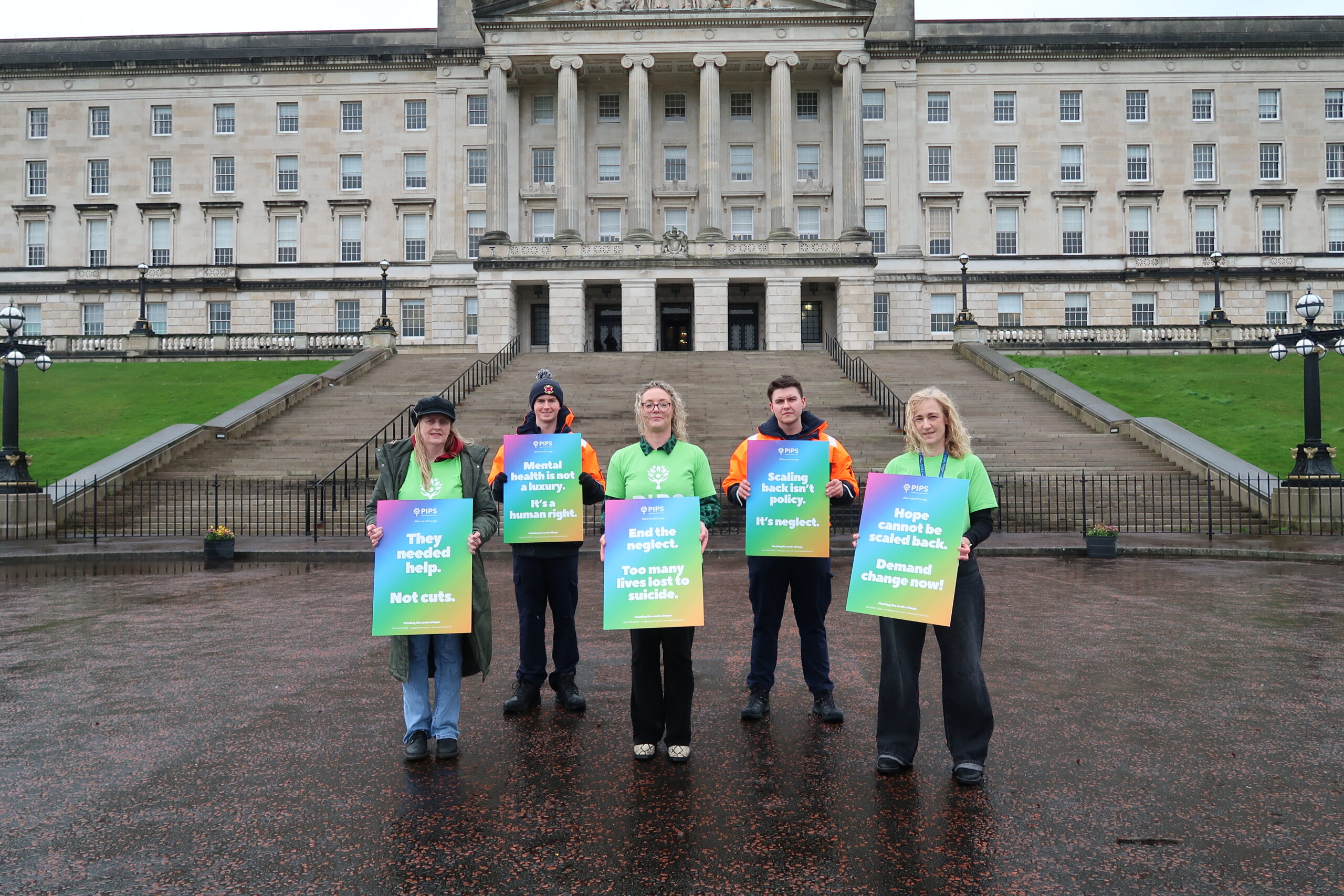
Sign Our Petition Here: https://pipscharity.com/campaigns/standwithpips/